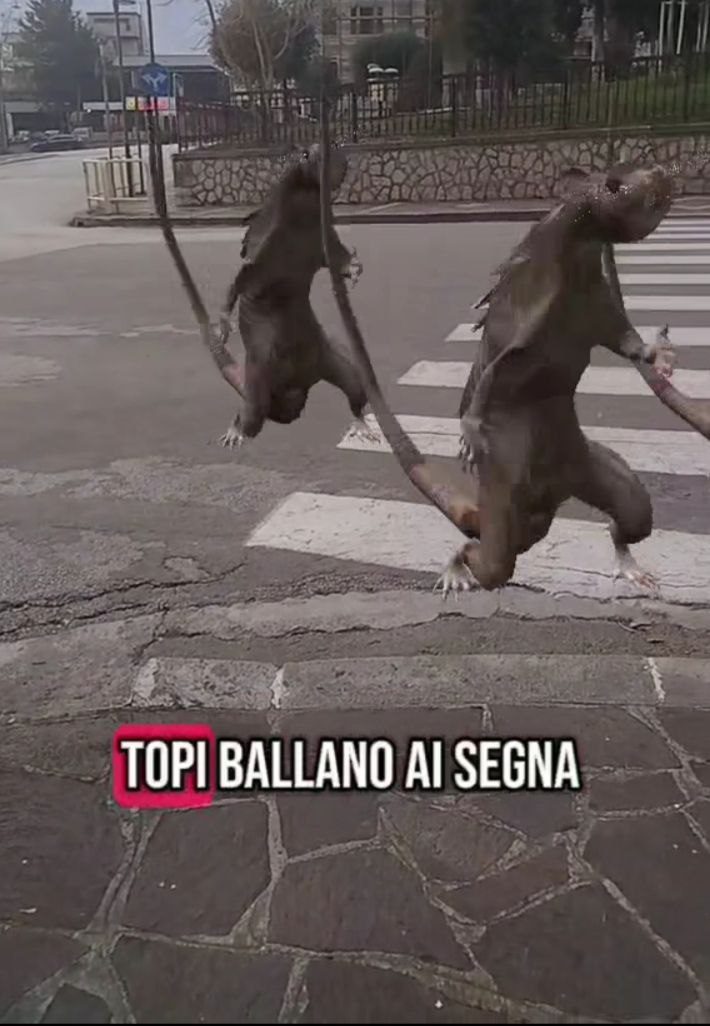
The art of subtitling (SUB) is essential for enjoying films, video games and other content in the original language. To achieve a good result you need a solid knowledge of the language and writing skills. Subtitles can be faithful to the spoken translation of a film or reinterpreted to add personality to the text, make it more fluid, or simply bring it closer to the original context.
In recent years, however, subtitles have also taken on a new role, creeping into everyday life and becoming visible even to those who are not fans of original-language works. On social media, in fact, most videos, from Reels to Shorts to TikToks, have subtitles. This happens regardless of any need to understand the language: what matters is communicating with those who don't want to turn up the volume, can't listen, or, more simply, are on public transport and have the good sense not to disturb the other passengers.
Let's talk about HARDSUB
"in videos encoded with hardsub subtitles, the subtitles cannot be hidden. The subtitles are an integral part of the video's frames" (Wikipedia)
\-When subtitles are intentionally burned into the video-
It can also happen that these subtitles are generated automatically or created by users who are not very skilled, whether in terms of software or grammar. It is not uncommon to read poorly cohesive words, especially when automatic subtitling apps are used, fonts lacking accented capital letters (which, by the way, are often particularly ugly, come on…), missing punctuation, typos and wrong words. And the interesting thing is that, in most cases, all this is simply accepted. The videos are uploaded like that, with no checks whatsoever. Often, moreover, the narrator does not appear in the video: an attention-grabbing subject is shown, while our eyes, poor things, are only two, and have to juggle images and texts that are already chaotic and fast. It is nice to see that the people who make these videos care about us, allowing us to enjoy the content in the most inaccessible places. But, at the same time, I often feel a bit mocked by the carelessness with which the task is carried out!
Maybe I'm the one getting confused, but if a text has to replace spoken narration in a visual context, then it should be clear and polished. I remember that, back in 2009, when I was still a kid, I tried to watch Terminator Salvation with some friends. Relying on the usual unorthodox sites, we found an Italian version HARDSUBBED in Russian. By the end of the viewing we all had a headache: our eyes kept falling on those beautiful Cyrillic captions, as if they could help us understand better, but they were only distracting us from what we could simply have listened to. We tried to follow the film, but after missing a few important frames, we ended up chasing the next subtitled sentence, until we got irritated.
The ever more widespread use of visual communication does not train the ear. Listening to certain videos could enrich the experience, allowing us to catch pauses, inflections and tones of speech, but all this is lost in an extreme simplification of the message. It is not a criticism, it is a fact. A fact that fits perfectly into a world where time is short, space is limited and desire is scarce. We are terrible listeners.
English translation of the Italian original. Read the original →